VA Construction Loans for Veterans — Available in 48 States
VA Construction Loans in
Maryland Veterans and Active-Duty Service Members have a direct path to building their ideal home. Our VA Construction Loan program delivers single-close financing that bundles construction and the permanent mortgage into one streamlined transaction—no duplicate closings, no payments during the build phase, and no private mortgage insurance. Explore your Maryland options and take the first step toward a custom home built on your terms.

We are proudly serving those who served the nation.

Shirley Mueller is a nationally respected VA loan Expert whose career spans decades of dedicated service to Veterans, Active-Duty Service Members, and surviving spouses across the United States—including Maryland’s military-rich communities from Baltimore to the DC suburbs. Her practice centers on VA construction loans, one-time close financing, and lending solutions tailored to each borrower’s unique situation.
Clients working with Shirley gain far more than loan approval: they receive end-to-end guidance from initial eligibility review through final closing, with a clear explanation of every VA benefit available to them. Whether you are financing new construction, purchasing an existing home, or evaluating refinance options, her record of results and straightforward approach make her a dependable partner for Maryland Veterans pursuing confident, informed homeownership.
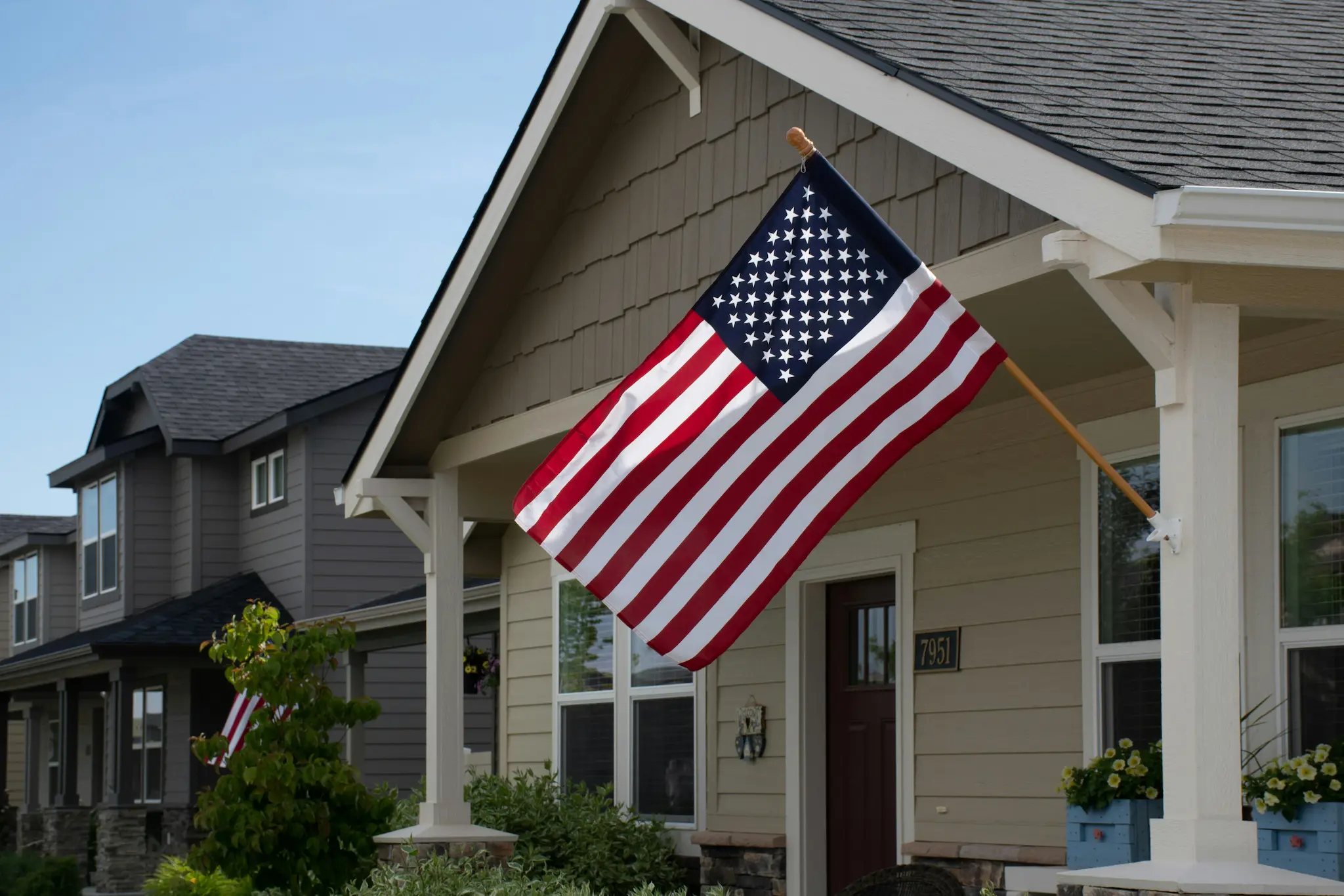
A VA construction loan in Maryland is a purpose-built financing option available exclusively to eligible Veterans, Active-Duty Service Members, and qualifying surviving spouses. It combines the construction period and permanent mortgage into a single loan—meaning one application, one appraisal, and one closing. There is no down payment requirement and no private mortgage insurance.
Maryland is one of the most military-dense states in the Nation. Major installations including Fort George G. Meade (NSA/CYBERCOM), Joint Base Andrews, Aberdeen Proving Ground, Naval Air Station Patuxent River, and the U.S. Naval Academy create strong Veteran communities throughout the state.
A VA construction loan lets qualified borrowers build in the corridors that matter most to them—from affordable Western Maryland markets like Hagerstown and Frederick, to coastal communities near the Chesapeake Bay, to the high-demand DC suburbs of Anne Arundel, Howard, and Montgomery counties.
Our Maryland VA construction loan services are designed to meet Veterans where they are—whether you already own land, or simply want to understand your building options. Each service is backed by specialists who understand Maryland’s unique lending landscape, county-level regulations, and military community needs.

If you already own land in Maryland, Our VA construction loan can finance the build on your existing lot, rolling land equity and construction costs into one structured loan.

This flexible financing option covers the full construction period and converts automatically into your permanent VA mortgage upon project completion—no re-qualifying, no second closing.

One application, one appraisal, one closing. Our one-time close option is the most efficient path for Maryland Veterans to build a new home.
Qualifying for a VA One-Time Close Construction Loan in Maryland begins with meeting the service criteria established by the U.S. Department of Veterans Affairs. Beyond those federal benchmarks, Maryland lenders will review your credit profile, income stability, existing debt obligations, and capacity to repay—assessing your complete financial picture, not just a single number.
Key eligibility highlights for Maryland include:
VA loan expert Shirley Mueller will walk you through Maryland’s VA construction loan eligibility requirements, help you compile required documentation, and support you at every stage of the application—so you access your full VA benefits with clarity and confidence.


Obtain pre-approval for your VA construction loan.


Choose an experienced builder that the lender will need to approve.


Finalize plans, specifications, and a detailed construction budget.
Complete your VA One-Time Close Construction Loan.
Begin your construction with smooth draw-based disbursements.
Transition seamlessly to your permanent VA mortgage.

Understanding Maryland’s property tax exemption programs is essential for Veterans planning a construction loan, because exemptions can materially reduce your annual carrying costs and improve long-term affordability. Maryland offers meaningful relief for eligible Veterans and the savings compound every year you own the home.
Disabled Veterans rated 100% service-connected permanent and total (P&T;) by the VA, qualify for a full real property tax exemption on their principal residence in Maryland. Veterans who are permanently unemployable under VA guidelines may also qualify. Property taxes in Maryland average roughly 1.1% of assessed value but range sharply. From under 0.9% in some Eastern Shore counties to over 1.3% in Howard County, making this exemption especially valuable in high-tax jurisdictions.
The Maryland Veteran property tax exemption includes:
Our team helps Maryland Veterans understand eligibility requirements, required documentation, and how to time the exemption application relative to construction loan closing.
Maryland combines a high concentration of Military installations, one of the nation’s strongest BAH (Basic Allowance for Housing) rates, and diverse geography that ranges from Chesapeake Bay waterfront to mountain valleys to dynamic urban neighborhoods. This makes it an exceptional state for Veterans choosing to build rather than buying a new home.
Top areas for VA construction loan borrowers include Baltimore—Maryland’s largest city with an affordable entry price well below the national median; Annapolis, the state capital with strong Naval Academy ties; Frederick and Hagerstown in Western Maryland, which offer relatively modest land costs and growing communities; and DC-adjacent corridors like Columbia, Odenton, and Waldorf that combine high BAH purchasing power with sustained resale demand.
Maryland’s key advantages for VA home construction include:
Our experienced team guides Maryland Veterans through every phase of the VA construction loan process—from land selection and builder coordination to appraisal and final closing, helping you build in the community that fits your mission and your family.

We connect qualified builders with Maryland Veterans who are ready to build using a VA Construction-to-permanent Loan. The VA no longer requires a separate builder ID, but all participating builders must satisfy lender underwriting standards and applicable VA guidelines.
Reach out to begin your partnership today!
Maryland’s housing stock is extraordinarily diverse—from brand-new DC-suburb construction to century-old Baltimore rowhouses to rural parcels on private wells in St. Mary’s County. Each property type carries its own VA appraisal considerations and understanding them early prevents delays and unexpected conditions at closing.
A VA construction appraisal in Maryland evaluates both the projected market value and compliance with VA Minimum Property Requirements (MPRs) covering safety, sanitation, and structural integrity. For new construction, the appraiser reviews building plans, site conditions, and local code compliance before issuing a Notice of Value.
Key Maryland appraisal considerations include:
Our team guides Maryland Veterans through every VA appraisal scenario, coordinating with lenders, builders, and appraisers to keep your construction timeline on track.

The VA does not mandate a minimum credit score, but most Maryland-based VA lenders require at least 620 for standard processing. Some lenders extend approvals below that threshold when compensating for factors—such as strong residual income, low DTI, or significant cash reserves—are present.
BAH (Basic Allowance for Housing) is counted as income for a VA loan and is often “grossed up” since it’s tax-free, which can increase your buying power. However, you still need to meet VA residual income requirements after all housing costs, so BAH helps—but doesn’t guarantee approval.
Yes, an existing land loan in Maryland can be paid off through the VA construction loan, provided you intend to build your primary residence on that land. The payoff is incorporated into the total construction loan amount, subject to lender approval and VA guidelines.
Interest reserve is calculated based on the estimated monthly interest during the construction period, multiplied by the number of months needed to build the home. It’s typically set aside upfront from the loan to cover interest payments while the home is being built.
Veterans with full VA entitlement have no hard loan limit in Maryland—approval is based on income, debts, and residual income. The 2026 baseline conforming limit is for most Maryland counties, with higher limits in certain DC-adjacent jurisdictions. Partial entitlement situations may impose county-level caps; confirm your entitlement status with your lender.
Equity reserves on a VA construction loan refer to the value of the land you already own plus any funds you’ve invested in the project. This built-in equity can strengthen your application and act as a financial cushion during construction.
Most VA appraisals in Maryland complete within 7 to 14 business days of ordering. Rural properties, well/septic situations, or projects in specialized markets (such as waterfront parcels or older Baltimore rowhouses) may require additional time for inspections or condition resolution. A private inspection before the VA appraisal helps surface issues early
VA construction loans can finance properties with up to four units, provided the borrower occupies one unit as their primary residence. For new construction, projected rental income from the other units cannot be used for loan qualification — only your own income and, if applicable, offsetting income from a departing residence may be counted. Multi-unit properties near Maryland’s major installations can still offer strong long-term investment value once the home is complete and rented.
No—VA loans can’t be used to purchase land by itself. They must be tied to building a primary residence, typically through a VA construction loan where the land purchase and home build are financed together.
Yes. Properties in FEMA Special Flood Hazard Areas (SFHAs)—common along the Chesapeake Bay, tidal tributaries, and low-lying coastal parcels—must carry flood insurance. Flood insurance premiums factor into residual income calculations and can affect loan approval. Construction plans must also comply with applicable flood zone regulations.
An interest reserve in a VA construction loan is a portion of the loan set aside to cover the interest payments during the construction phase. Instead of making monthly payments out of pocket, the lender uses this reserve while the home is being built, helping keep your cash flow stable until the loan converts to a permanent mortgage.
A Certificate of Eligibility (COE) is a document from the VA that confirms a veteran’s eligibility for a VA home loan based on their service history and entitlement status.
Connect with VA Loan expert Shirley Mueller, Sr. VP of Veteran Lending, offering expert guidance and proven experience to help you build your dream home in Maryland with VA Construction Loan.